
Last updated November 15, 2026
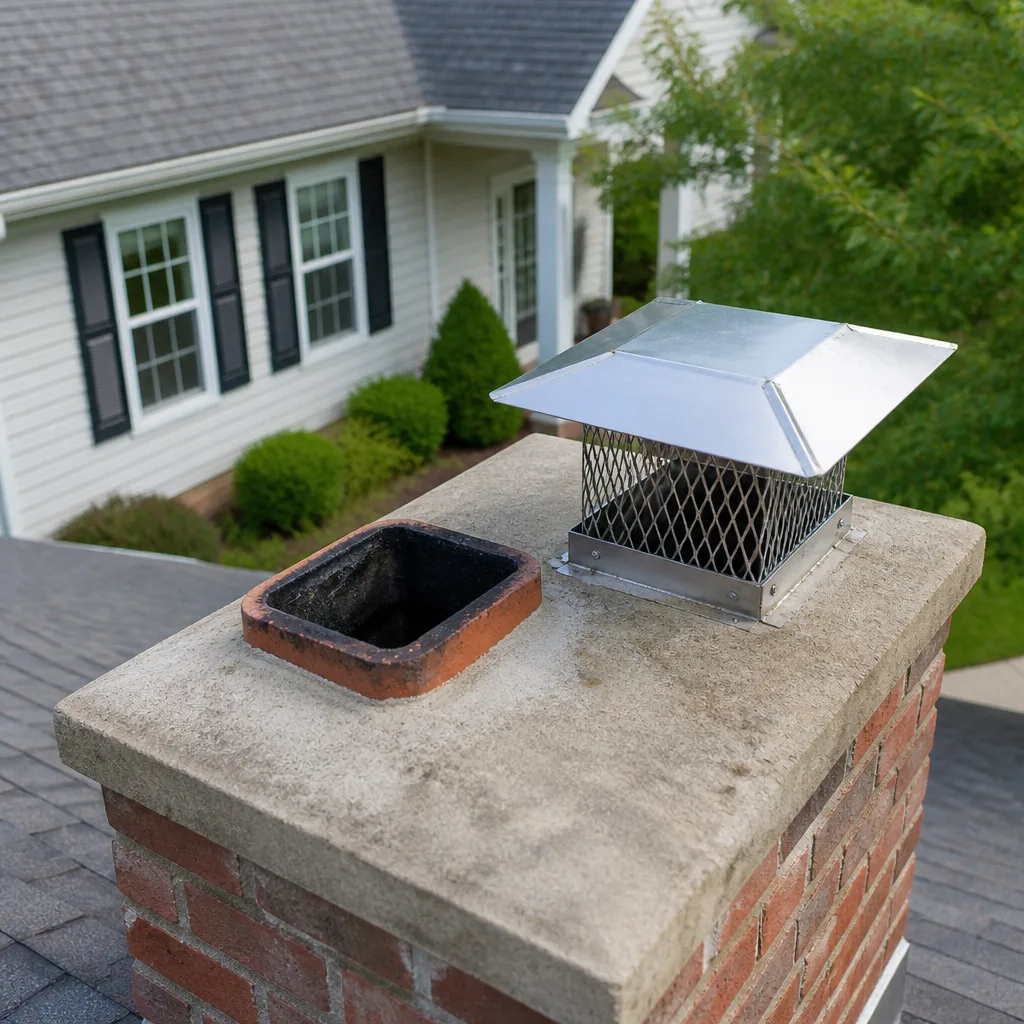 Sweep & inspection
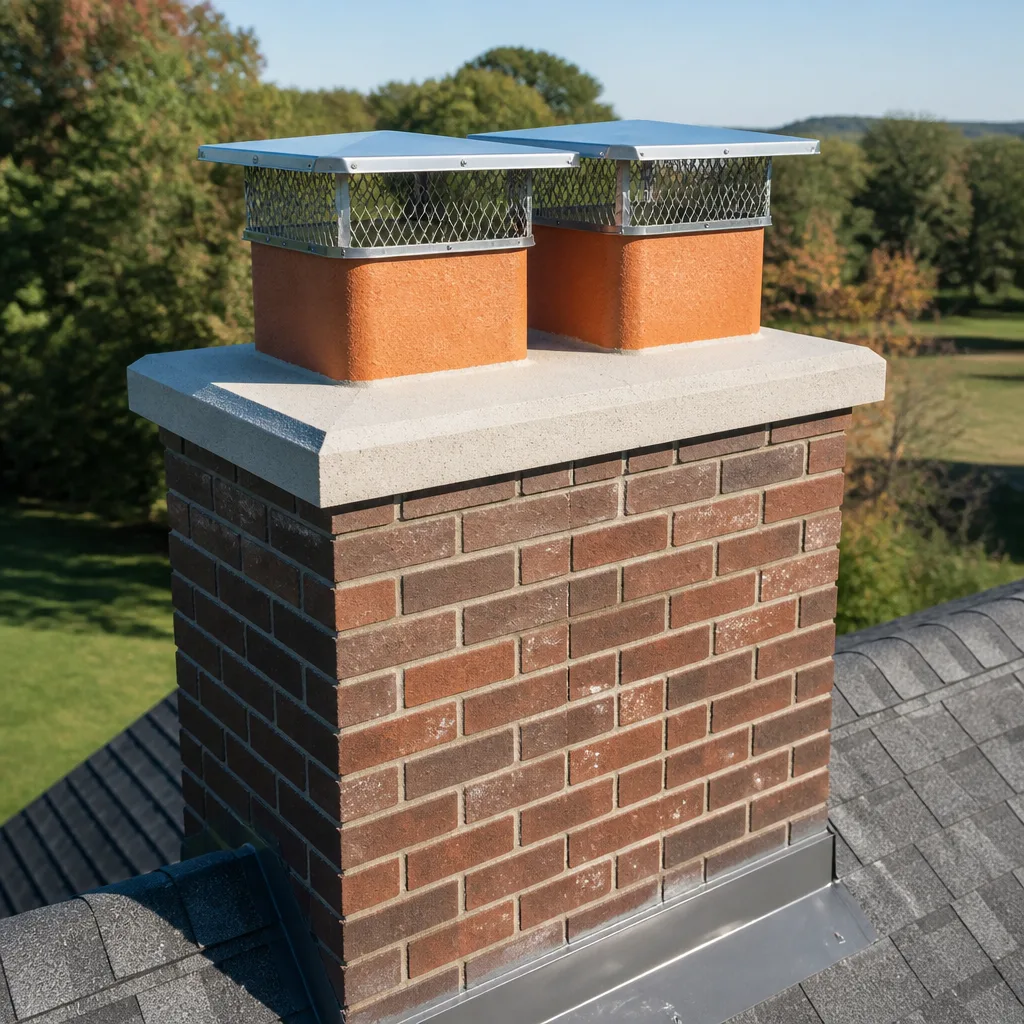 Caps & crowns
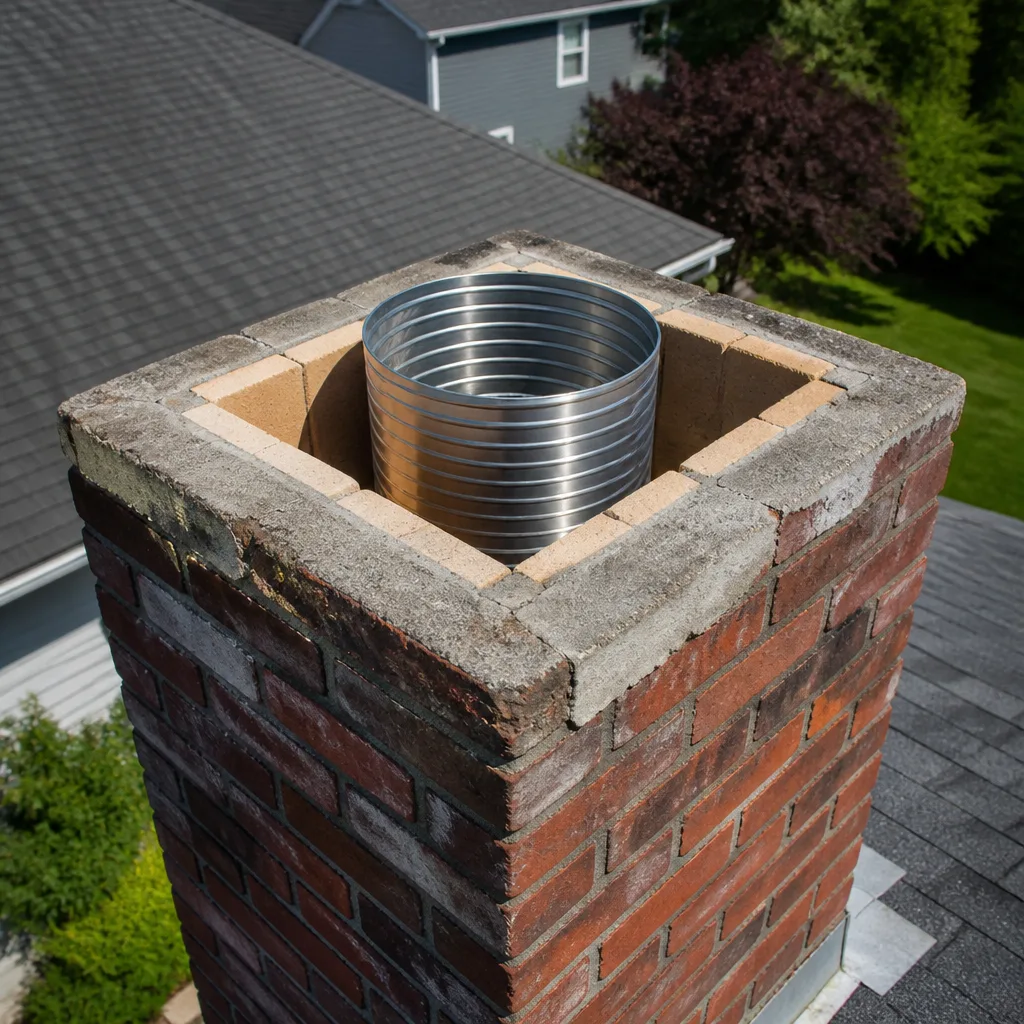 Flue relining
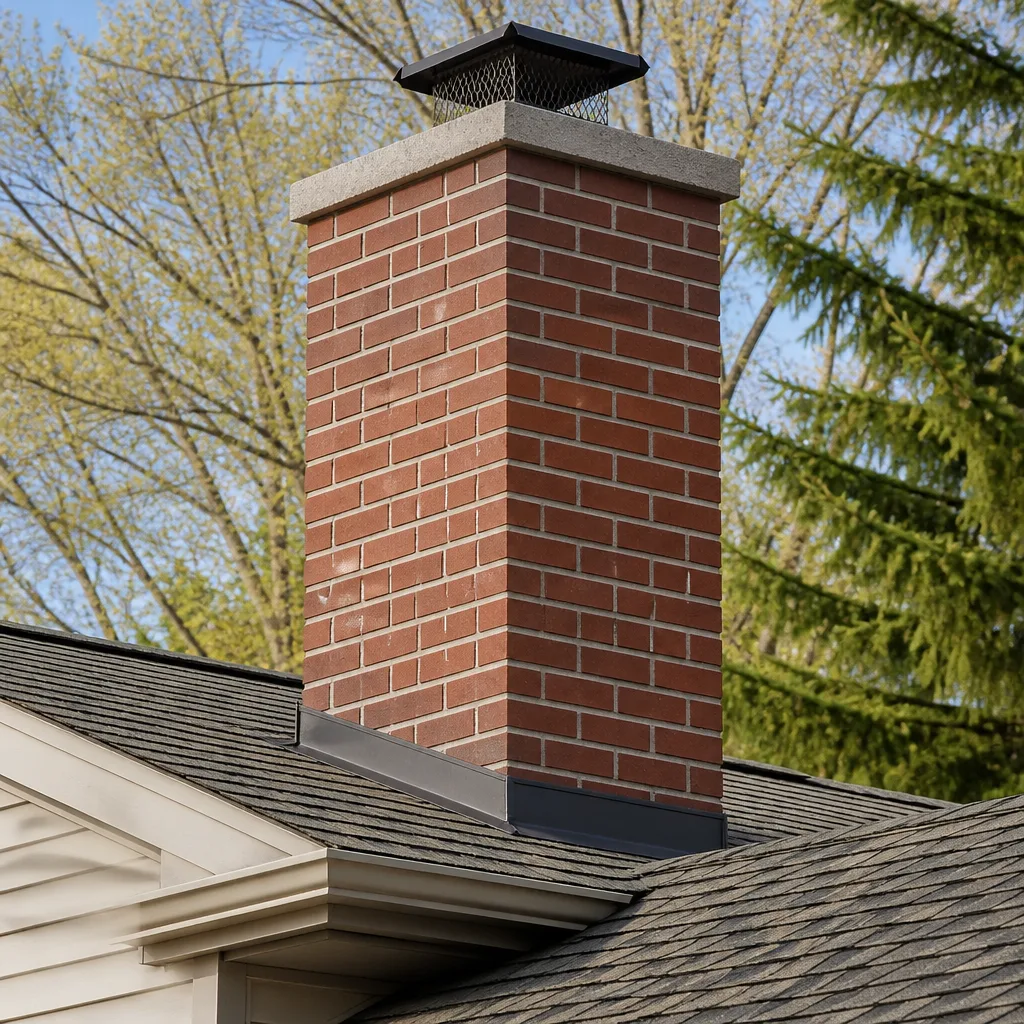 Masonry repair
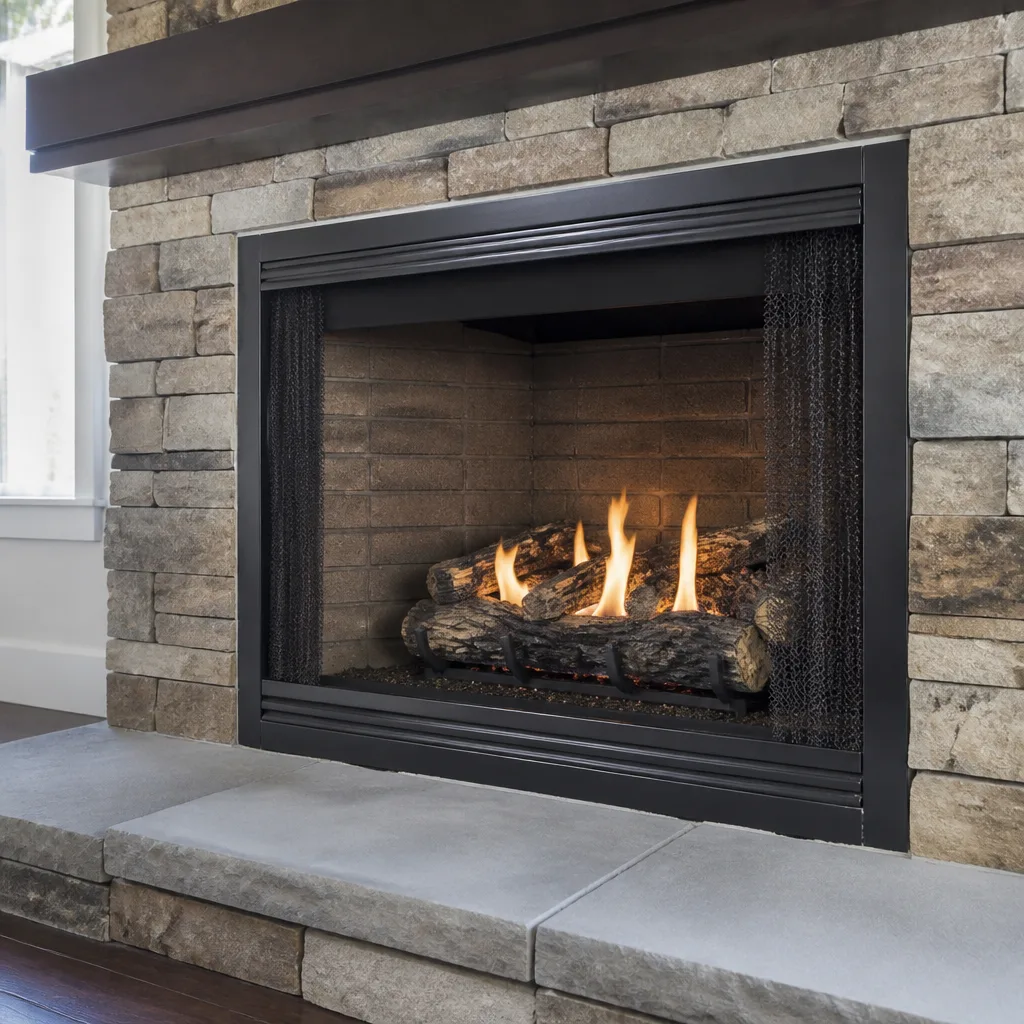 Gas fireplace service
Level 1 sweep and inspection to the NFPA 211 annual standard - flue, crown, cap, and flashing checked and photographed
Chimney sweep logs do not sweep chimneys. They loosen some creosote - which then falls where a brush and vacuum still have to collect it.
Chimney Cleaning Warning Signs: A Gainesville Homeowner’s Reference Guide
A white stain running down your exterior chimney isn’t a cosmetic issue. That chalky crust is efflorescence, and it means water is already moving through your masonry. By the time you see it on the outside of the house, the damage has already started on the inside, in the firebox and the flue and the mortar joints you can’t see from the driveway. Most chimney warning-sign content is built around dramatic scenarios: a room full of smoke, a fire that won’t draw, flames where flames shouldn’t be. Those are real, but in Gainesville the earlier, quieter signals are the ones that actually decide whether you’re looking at a modest cleaning or a four-figure repair. This guide walks through those signals one at a time and explains what each one means.
Quick Answer
The most common chimney warning signs in Gainesville are moisture-driven: white efflorescence on exterior brick, musty odors inside the house during the humid summer months, rust staining on the firebox floor, and spalling firebrick or eroded mortar joints inside the firebox itself. A smoky smell in the room on a warm day with no fire burning almost always means the flue is pulling humid air, not venting a fire, and it’s one of the clearest early signals that your chimney needs attention before the next burning season. Catching these signs early is what separates a routine cleaning from a masonry repair.
Styles & brands we work with
- Sweep & inspection
- Caps & crowns
- Flue relining
- Masonry repair
- Gas fireplace service
Table of Contents
- Efflorescence: The White Stain That Means Water
- Musty Summer Odors and What They Tell You
- Reading the Firebox: Spalling, Deposits, Mortar
- Why Your Chimney Smells Smoky on a Warm Day
- Normal Settling Sounds vs. Active Failure
- Animal Intrusion: Sounds, Odors, and Local Species
- Rust Staining: Where It Comes From and Why It Matters
- When a Cleaning Isn’t Enough
Efflorescence: The White Stain That Means Water
Efflorescence is a white, powdery or slightly crystalline deposit that shows up on the exterior of a masonry chimney. It forms when water moves through the brick and mortar, dissolves salts naturally present in the masonry, and then evaporates at the surface, leaving the salts behind. There’s no cosmetic explanation for it. If you can see it, water is already finding its way through the chimney structure, and the pressure of that water moving out through the masonry is also pushing mortar apart from the inside.
In Gainesville, this is one of the earliest signs we run into, and it’s a good deal more common than the smoke-in-the-living-room scenarios that get all the attention. The pattern matters. Streaking that runs from the crown downward usually points to a failing crown, a masonry cap that’s cracked or pulling away from the flue, or an uncovered flue opening taking rain straight down the stack. A stain concentrated near the roofline or under the crown suggests the trouble is at the top. A stain that’s distributed across the whole face of the chimney and reappears after dry weather can mean water is migrating from somewhere else in the structure.
What efflorescence tells you, in plain terms, is this: the chimney is wet, and it has been wet enough, long enough, for the moisture to carry mineral salts to the surface. That’s not a one-rain event. It’s a pattern. Left alone, the same water that produces the white stain breaks down mortar joints, spalls firebrick, and rusts the steel components inside the flue. A chimney cap and crown repair now is the right conversation to be having. A masonry rebuild later is the wrong one.
The fix starts with a proper chimney repair assessment so we know exactly where the water is entering. Sometimes it’s as simple as a missing cap or a crown that has cracked at the flue collar. Sometimes it’s a deteriorated mortar joint on the exterior that needs to be repointed before it spreads. We fit Gelco and Famco chimney caps because they’re made to the specific dimensions of the flue they’re protecting, not the one-size hardware-store caps that leave gaps at the corners.
Musty Summer Odors and What They Tell You
If your fireplace or stove smells musty, damp, or organic during the summer months, that’s a moisture signal specific to warm and humid climates, and it’s one of the signs we hear about most often from homeowners across Gainesville. A chimney is a vertical shaft full of masonry, metal, and creosote residue, and in a humid climate it holds moisture. When the air inside the flue is warmer and more humid than the air outside, the chimney has a tendency to draft slightly, pulling humid air down and through the firebox into the room. That’s the musty smell you notice when you walk past the fireplace on a July afternoon.
The smell itself is usually organic material combined with moisture: dried creosote residue softening in the humidity, porous firebrick holding water, a small amount of debris or bird nesting material that’s been sitting in the smoke shelf or the smoke chamber since the last burn season. The smell by itself isn’t a hazard, but it’s a reliable indicator that there’s enough moisture in the system to be worth investigating. The same moisture that produces a musty smell is what feeds the efflorescence on the outside, and what eventually rusts dampers and accelerates liner aging.
- A faint musty smell in warm weather only: usually moisture in the firebox and flue, addressable with a sweep and an inspection.
- A strong, persistent odor that gets worse when the chimney is used: often creosote buildup that has soaked up moisture and needs to be removed before the next season.
- An odor coming from the firebox even when the damper is closed: sometimes a damper that no longer seats properly, which lets humid air into the room.
- A smell like dead animal: a separate problem, covered below in the animal intrusion section.
An inspection and chimney sweep before the humid season is the correct response to a musty smell. In a Gainesville home, a chimney sweep in spring is often worth more than one in autumn, because it removes the residue that holds moisture through the summer.
Reading the Firebox: Spalling, Deposits, Mortar
The firebox is where you can do the most useful hazard-reading yourself without any tools or risk. When spalling firebrick, white mineral deposits, or eroding mortar joints are visible inside the firebox, a cleaning alone won’t fix the problem. Those signs point to a chimney that needs repair, not just service. You don’t need to remove anything or touch anything to see them. You just need to know what you’re looking at. Turn on a flashlight and look in from a few feet back, without reaching in and without moving anything.
Firebrick that’s breaking up or crumbling is spalling. It happens when firebrick is repeatedly wetted and dried, or when it’s overheated, and the surface of the brick begins to flake away. A thin crack in a firebrick is common and often cosmetic. A firebrick that has lost a chunk of its face, or one that’s cracked all the way through, is not. Spalled firebrick exposes the mortar and masonry behind the firebox, and that masonry isn’t rated for the direct heat of a fire.
White, chalky mineral deposits inside the firebox are a different signal. They look a little like the efflorescence on the exterior but tell you the water is coming down through the flue, often through an uncapped chimney or a damaged crown, and probably reaching the firebox after running down the inside of the flue. That’s why an uncapped chimney is more than a nuisance. It’s a slow, steady water injection into the firebox and the smoke chamber.
Mortar joints inside the firebox are the third signal. If the joints between the firebricks look recessed, if the mortar is sandy or crumbly to the eye, or if you can see gaps between the bricks, the firebox lining is losing material. This is not a “wait for the next cleaning” situation. Firebox repair is a specialized job, and the right response is a chimney inspection that identifies the extent before the next fire is lit. This is where our inspection work matters most: the report tells you whether the fix is a firebox rebuild, a liner issue, or something simpler.
Why Your Chimney Smells Smoky on a Warm Day
A smoky smell inside the room on a warm day with no fire burning is what happens when the chimney is pulling air downward. Unlike in a cold climate, where a smoky smell usually points to a blocked flue or a failing draft, in a Gainesville home that smell very often means the chimney is sucking humid, smoke-scented air down the stack. Warm air inside the house is lighter than the cooler, damper outdoor air, and the chimney becomes a path of least resistance for air movement in either direction. When the direction reverses, air that has been sitting in the flue comes into the room.
The air coming down that flue carries the smell of past fires with it. It picks up creosote residue off the flue walls, it carries humid air that’s been absorbed by the firebox masonry, and it deposits that smell into the living space. It’s often strongest after rain, when the whole system is dampest, and it can be worse in a house with a tightly sealed envelope, because there’s nowhere else for the pressure to equalize. That’s why some Gainesville homeowners only notice the smoky smell on certain days: the pressure difference reverses with the weather.
The fix depends on what the inspection finds. Options that come up in practice include capping an uncapped flue to keep the stack sealed when it’s not in use, addressing a missing or damaged top-sealing damper, and correcting negative pressure in the house if the fireplace is losing a draft battle with the rest of the HVAC system. A traditional throat damper that’s no longer seating properly will let the same air through. A top-sealing damper at the crown of the chimney closes the stack at the top, sealing the flue from the weather, the animals, and the humid air.
None of that is guesswork. If you’re seeing a smoky smell on a warm day with no fire, the right first step is a proper Gainesville Chimney Cleaning inspection so the source is confirmed before any repair is quoted.
Normal Settling Sounds vs. Active Failure
Every wood-framed house with a masonry chimney makes some creaking and ticking sounds as it heats, cools, and adjusts with the weather. The distinction between normal settling and active failure lies in the pattern of when the sounds occur, their character, and what else you notice in the same period. A house that ticks a little after a cold snap or after a hot day is behaving normally. A chimney that starts producing a new, repeating, sharper sound at a specific moment is telling you something changed.
You can often distinguish between the two without opening anything. You don’t need to disassemble anything to hear what a chimney is doing. Listen from the room where the fireplace opens.
- Note when the sound happens. During a fire, after a fire, during rain, or during the hottest part of an afternoon all point to different causes.
- Describe the sound. A tick or creak after heating is normal thermal movement. A scrape, rattle, or persistent flutter suggests something loose in the flue or draft path.
- Note the location. Sound from the crown area, from the firebox, or from inside the wall are separate problems.
- Look for a companion sign. Sounds plus visible soot at the firebox or a smoky smell are together worth much more than either alone.
- Write it down. A note you can read back to the technician on the phone is worth more than trying to remember a sound weeks later.
A flutter or thumping during a fire, combined with visible soot or a smoky smell, points to a draft problem and often a damper issue. A scraping or scratching that repeats at night is usually an animal. Crumbling sounds while the chimney is in use deserve a fire that’s shut down and an inspection before the next one. None of these should be diagnosed by opening the firebox and starting to move parts around. A technician with proper tools is the right person to confirm what the sound means.
Animal Intrusion: Sounds, Odors, and Local Species
Chimneys are attractive to animals because they’re warm, dry, and vertical. In Gainesville the usual suspects are chimney swifts, squirrels, and raccoons, in roughly that order of frequency. Each leaves a different fingerprint. Reading the evidence correctly is what tells you whether you’re dealing with a bird that’s already left or a raccoon that’s still in there.
Chimney swifts are small, dark, fast-flying birds that historically nested in hollow trees and have taken to masonry chimneys in the same way. They’re migratory and they nest in the flue during the warm months. The evidence is usually a soft, chittering sound during daylight hours, and sometimes small droppings in the firebox. Swifts are protected in the U.S. under federal rules, which means you can’t simply remove a nesting pair. The right response is an inspection and a conversation about timing, then a properly fitted cap once they’ve left the flue. A cap fitted before the nesting season prevents the return.
Squirrels are more active and more destructive. They’re excellent climbers, they get through small openings at the crown, and once inside they can chew through materials and bring in nesting debris. The sound is a scratch-and-rattle, often in the early morning. Squirrels have a way of testing whether a cap is a real cap. One that’s been attached with a spring-fit or a wire lash will often lose that battle. A Gelco or Famco cap sized to the flue is a real barrier.
Raccoons are the heaviest and the most serious. A raccoon on a chimney usually leaves strong evidence: a loud, deliberate scratch-and-thump at night, a musky odor in the house, and often visible droppings in the firebox or on the roof near the crown. Raccoons can damage the crown, dislodge a cap, and leave the sort of mess that requires professional removal. That’s not a job to attempt on your own.
- Sounds during the day, small and chittering: likely chimney swifts, and the response is timing plus a cap after they leave.
- Scratching at dawn with chewing sounds: usually squirrels, and capping is the long-term answer.
- Loud thumping at night with musky odor: raccoons, and this is a call-a-professional situation.
- Dead-animal smell but no sound: an animal that’s already gone, and the flue needs to be cleaned before the next fire.
Any of those situations calls for an inspection before the next fire is lit. We fit caps from Gainesville homes with a proper measure of the flue, which is the only way to guarantee an animal can’t get past it.
Rust Staining: Where It Comes From and Why It Matters
Rust staining on the firebox floor, on the damper, or around the edges of the firebox is a moisture signal. A small amount of surface rust on a damper that’s been sitting unused since the last burn season is common and usually not alarming. A rust-colored stain running across the firebox floor, or rust that appears on a steel component that should be protected from water, is telling you water has been in that space recently and often. In a Gainesville home with a masonry chimney and a steel damper assembly, the damper is often the first part to show it.
The most common path for water to reach the firebox in this climate is from the top of the chimney, not from the bottom. Water enters through a missing or damaged cap, a cracked crown, a failed flashing at the roofline, or an uncovered flue during the summer storm season. It runs down the flue, pools at the smoke shelf and the firebox floor, and then works its way into any steel it contacts. A damper that rusts in place won’t open and close properly, which creates a draft problem all on its own.
Rust on a flexible liner’s top fitting or around a top plate can also point to water intrusion at the crown. In homes with a stainless steel DuraFlex liner, rust is the wrong color to see. Stainless doesn’t rust the same way. What looks like rust at the top of a lined chimney is often residue from animal debris or creosote that’s taken on water, and the inspection will sort out which it is. If the liner itself is showing corrosion at fittings, the cause is worth identifying before the next burn season.
Where rust leads is a real decision. If the firebox masonry is intact and the water source is a missing cap or a failed crown, the answer is repair and weatherproofing. If spalling firebrick and rust are both present, the firebox is compromised and the repair is bigger. That’s exactly the kind of finding a real inspection surfaces early, while the fix is still modest.
When a Cleaning Isn’t Enough
Chimneys are one of those systems where a small problem, caught in time, stays small. The signs in this guide tell you that something in the system has changed, and the useful question becomes what the right service actually is. For most of the signs above, the right answer starts with an inspection, not a cleaning. A cleaning is what a chimney needs when the flue is coated with creosote and there’s nothing structurally wrong. An inspection is what a chimney needs when efflorescence, musty summer odors, spalling firebrick, rust, or animal signs are present.
We get asked, often, whether repair is really necessary. The answer always comes from what the camera sees. Nothing is recommended without evidence you can see for yourself on the inspection report, and if the work can safely wait, we say so. That’s the point of a camera inspection with a photo report: it turns a “we think you need a new liner” conversation into one where the homeowner sees the crack, sees the efflorescence inside the flue, sees the animal nesting material, and makes the call. When the lining itself has deteriorated but isn’t yet a full replacement, we use HeatShield to resurface the existing flue, which extends its life without the full relining cost. When replacement is the answer, we install DuraFlex flexible liner systems, the same professional-grade material certified specialists use. Olympia Chimney and Copperfield components fill in the fittings around the flue, and those aren’t stocked at consumer retailers for a reason.
Common Mistakes to Avoid
- Treating efflorescence as cosmetic. A white stain on the exterior brick is a moisture indicator, not a paint problem. Painting over it traps the water and accelerates the damage underneath.
- Skipping the sweep in spring because it’s humid and you’re not burning. In Gainesville, spring is exactly the right time to sweep. The residue that comes out is what would otherwise hold moisture through the summer.
- Judging the chimney by the firebox you can see. The flue above the firebox and the crown outside are where most damage starts. A clean-looking firebox doesn’t mean a sound chimney.
- Using a hardware-store cap that “mostly fits.” A cap that doesn’t seat properly on the flue lets in rain and animals through the gaps. A cap fitted to the flue dimensions does the job.
- Putting off an inspection because the chimney is still “working.” A chimney can draw well and still have a compromised liner or a failing crown. Working doesn’t mean sound.
- Assuming animal intrusion is over once you stop hearing sounds. A raccoon that’s left usually leaves behind debris and a smell that has to be cleared before the next fire is lit.
- Hiring a general handyman for a chimney repair. Chimney work is specialized. Firebox repair, liner work, and crown repair each have their own materials and methods, and getting the wrong one means redoing it.
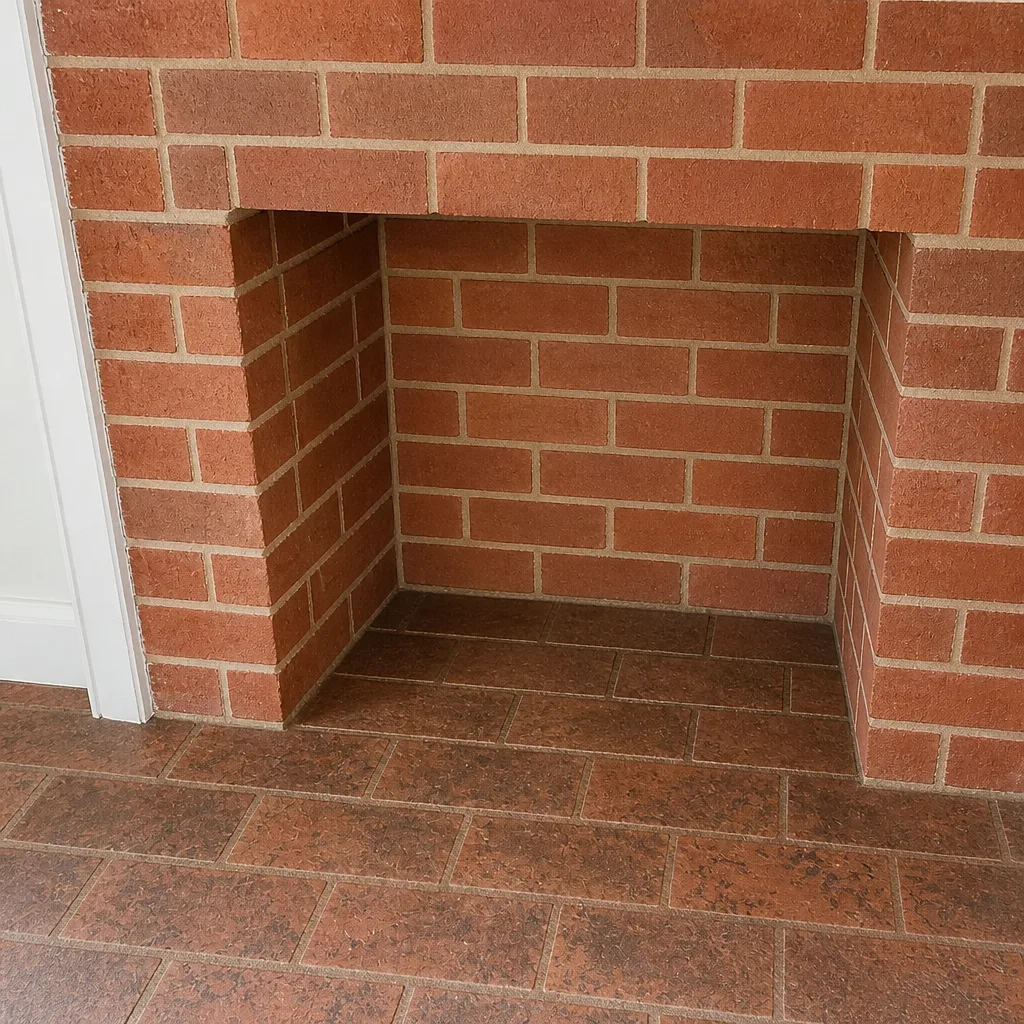
See the difference
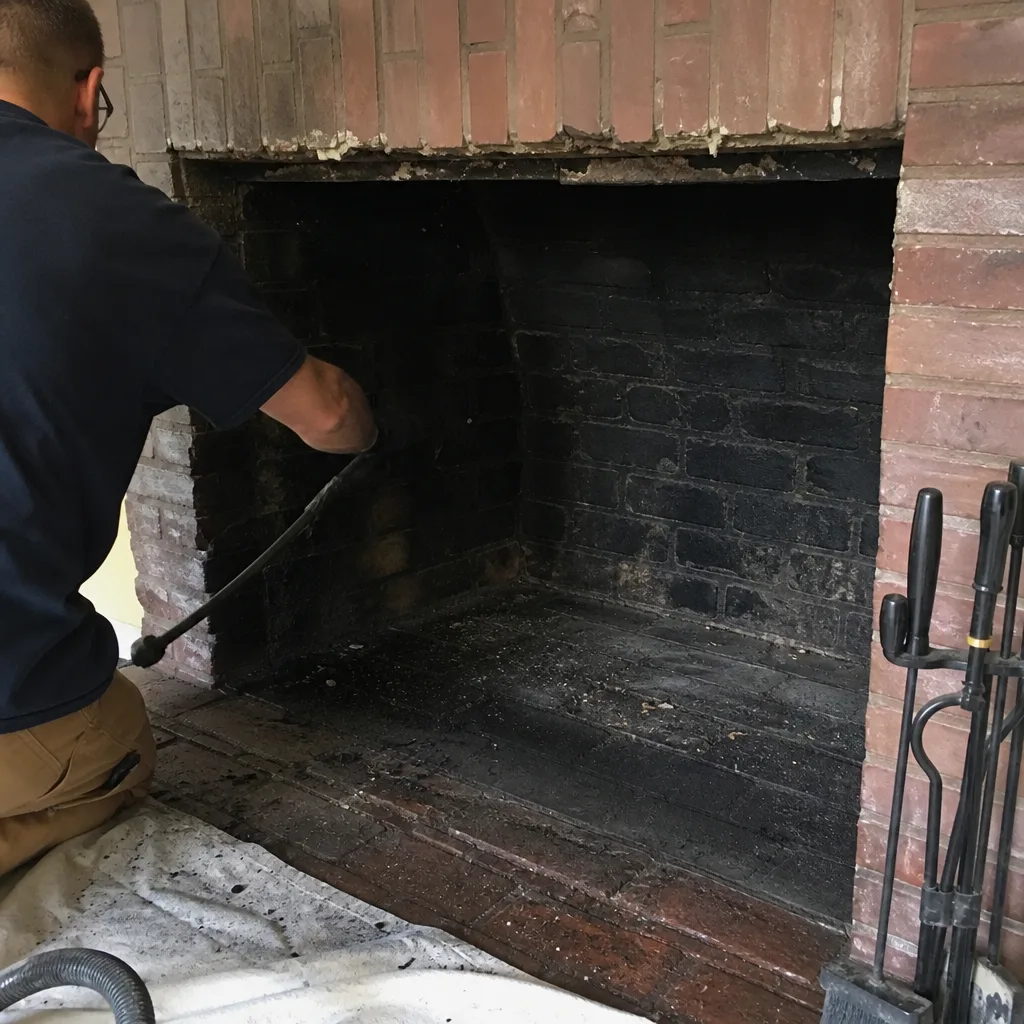 Before
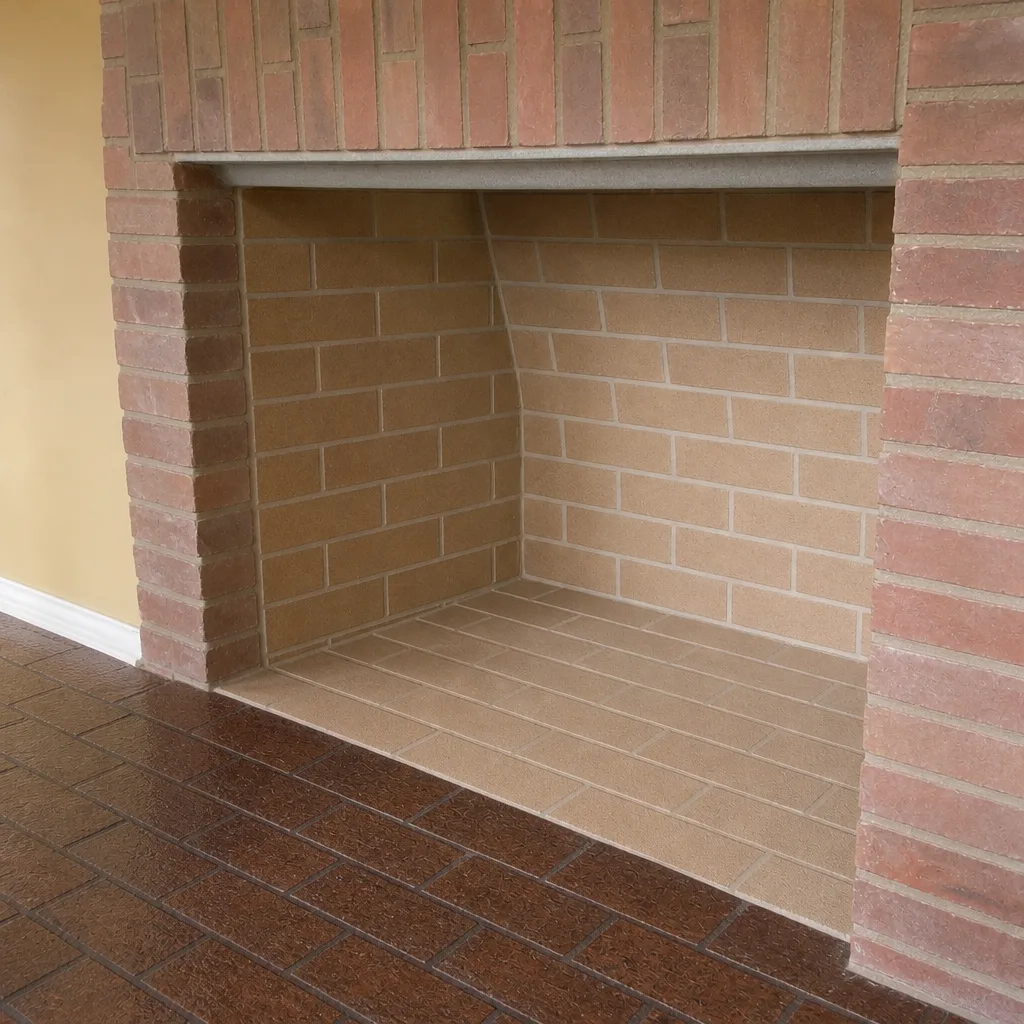 After
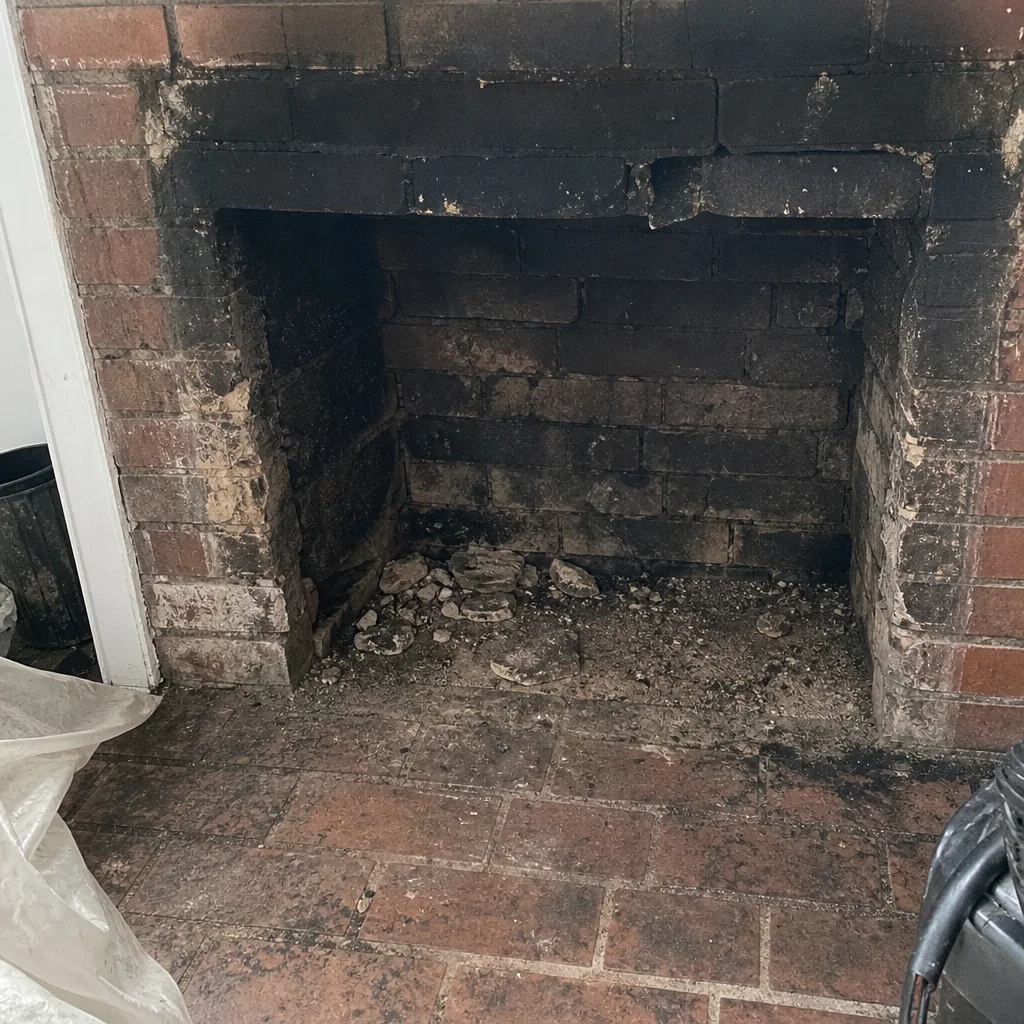 Before
 After
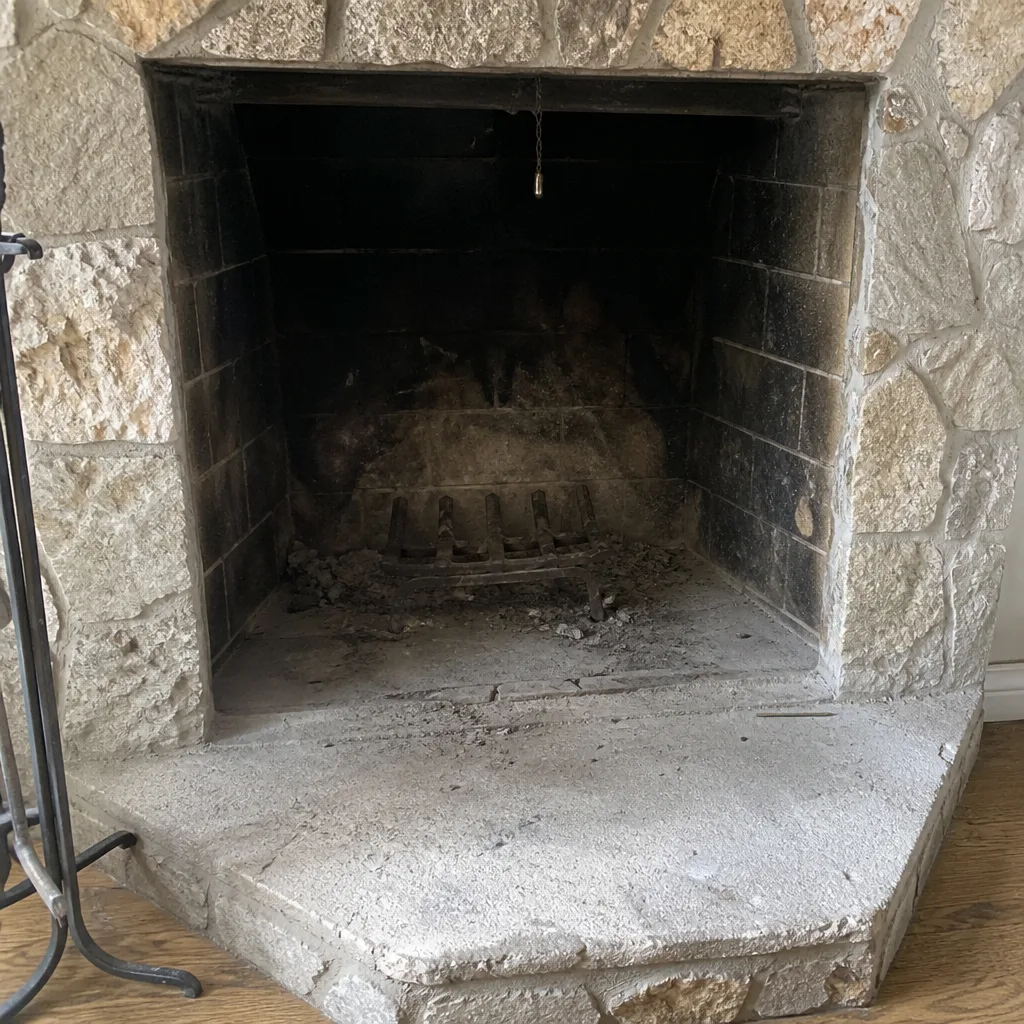 Before
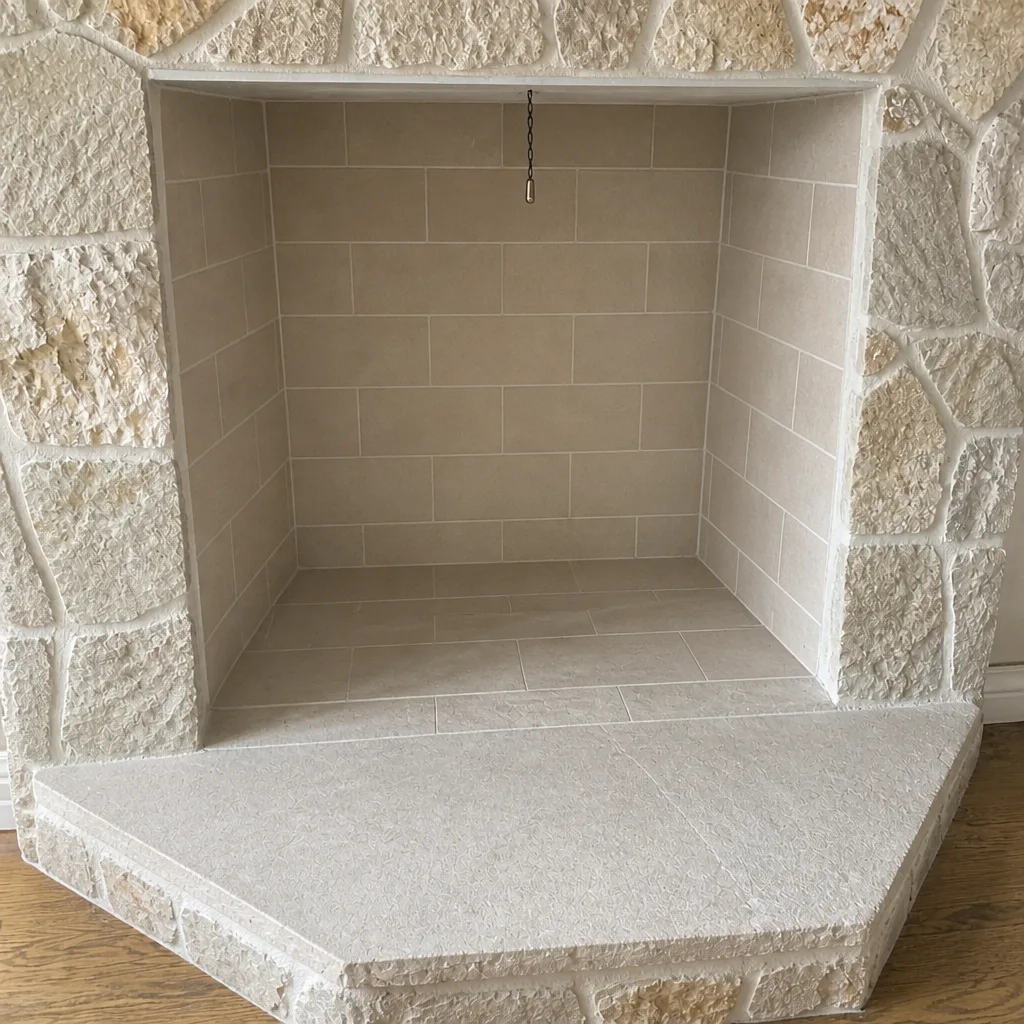 After
When to Call a Professional
Call for a professional inspection when you see efflorescence on the exterior, when you notice a musty smell during the humid months, when the firebox shows spalling firebrick or rust staining, when the chimney makes a scrape or scratch at night, or when you smell smoke in the room on a warm day with no fire lit. Any one of those signs is reason enough on its own. If two or more of them are happening at the same time, the priority goes up. Burn season is the wrong time to discover a repair problem, so a sweep in spring or a sweep in early autumn is usually the right response to what you’re seeing. Do not open the firebox or the flue yourself to investigate. The liner, the damper assembly, and the smoke chamber all have real risks to a homeowner who doesn’t know the system.
Gainesville Chimney Cleaning offers free estimates in Gainesville. Call (844) 834-5386. We answer 24/7. Fast dispatch from 7am to 7pm, Sunday through Friday. Our technicians have up to 11 years of experience, every service call is handled by technicians who work on chimney systems specifically, and inspections include camera evidence with a photo report you keep.
Frequently Asked Questions
The first signs are often visual and slow: white efflorescence on exterior brick, a musty odor inside the house during humid months, rust staining on the firebox floor, or a faint smoky smell on a warm day with no fire lit. A visible buildup of soot or creosote on the firebox walls is the more familiar signal, and it’s still a reliable one. Any of these warrants a sweep and an inspection before the next burn season, and calling (844) 834-5386 gets you a free estimate.
In Gainesville a smoky smell with no fire usually means the chimney is pulling humid, smoke-scented air down the flue and into the room, not venting smoke from a fire. Warm air in a tightly sealed house, combined with damp air in the stack, reverses the normal draft. The smell comes from creosote residue and damp firebox masonry rather than from active combustion. A proper inspection confirms the source before any repair is recommended, and you can call (844) 834-5386 for exactly what your chimney needs.
White powder or chalky staining on exterior brick is efflorescence, and it means water is moving through the masonry and drying at the surface, carrying mineral salts with it. It’s not cosmetic. The likely sources are a failing crown, a damaged cap, an uncapped flue, or deteriorated exterior mortar. An inspection identifies where the water is entering. Call (844) 834-5386 to book one and treat the cause, not the stain.
Normal sounds are a tick or creak after heating or a change in weather, and they don’t repeat. A scrape, rattle, thump, or flutter that repeats at a specific time of day or during rain points to something changed: a loose component, a draft problem, or an animal. If the sound is combined with a smoky smell, soot, or a flutter during a fire, shut the fire down and call for an inspection before the next one. Call (844) 834-5386 to book one.
Chimney swifts, squirrels, and raccoons are the three most common in the Gainesville area, in that order of frequency. Swifts are a daytime chittering sound and are protected under federal rules, so timing matters. Squirrels are a dawn scratch-and-rattle and a chew risk. Raccoons are a nighttime thump with a musky odor and heavier damage. All three are resolved with an inspection, professional removal when needed, and a properly fitted cap. Call (844) 834-5386 for an estimate.
A cleaning is enough when the flue is coated with creosote and there’s nothing structurally wrong. An inspection is what’s needed when you’re seeing warning signs: efflorescence, rust, spalling firebrick, summer odors, animal evidence, or a smoky smell with no fire. The inspection answers the question of whether a cleaning is the right service or whether repair is. The camera evidence lets you see the answer for yourself before any work is recommended. Call (844) 834-5386 to book an inspection with a free estimate.
The Bottom Line
Chimney warning signs in Gainesville tend to be quiet and moisture-driven: efflorescence on the exterior, musty summer odors, rust staining, spalling firebrick, and a smoky smell on a warm day. None of those signs get better with time, and every one of them points to a fix that’s cheaper now than later. The camera inspection is the point in the process where a modest service and a significant repair get separated, and seeing the evidence yourself is what makes the recommendation trustworthy. If you’re noticing any of these signs, the right next step is a sweep and an inspection before the next burning season, not a guess. Professional-grade materials, not hardware-store substitutes, and honest advice on what your chimney does and doesn’t need.
Call (844) 834-5386 for a free estimate. We answer 24/7, with fast dispatch from 7am to 7pm, Sunday through Friday. Estimates are free, the written estimate sets the final price, and nothing is recommended without camera evidence you can see for yourself.
Written by the team at Gainesville Chimney Cleaning.